
Prakash Parv — The Journey from Prasthan to Upasthan: Guru Gobind Singh Ji
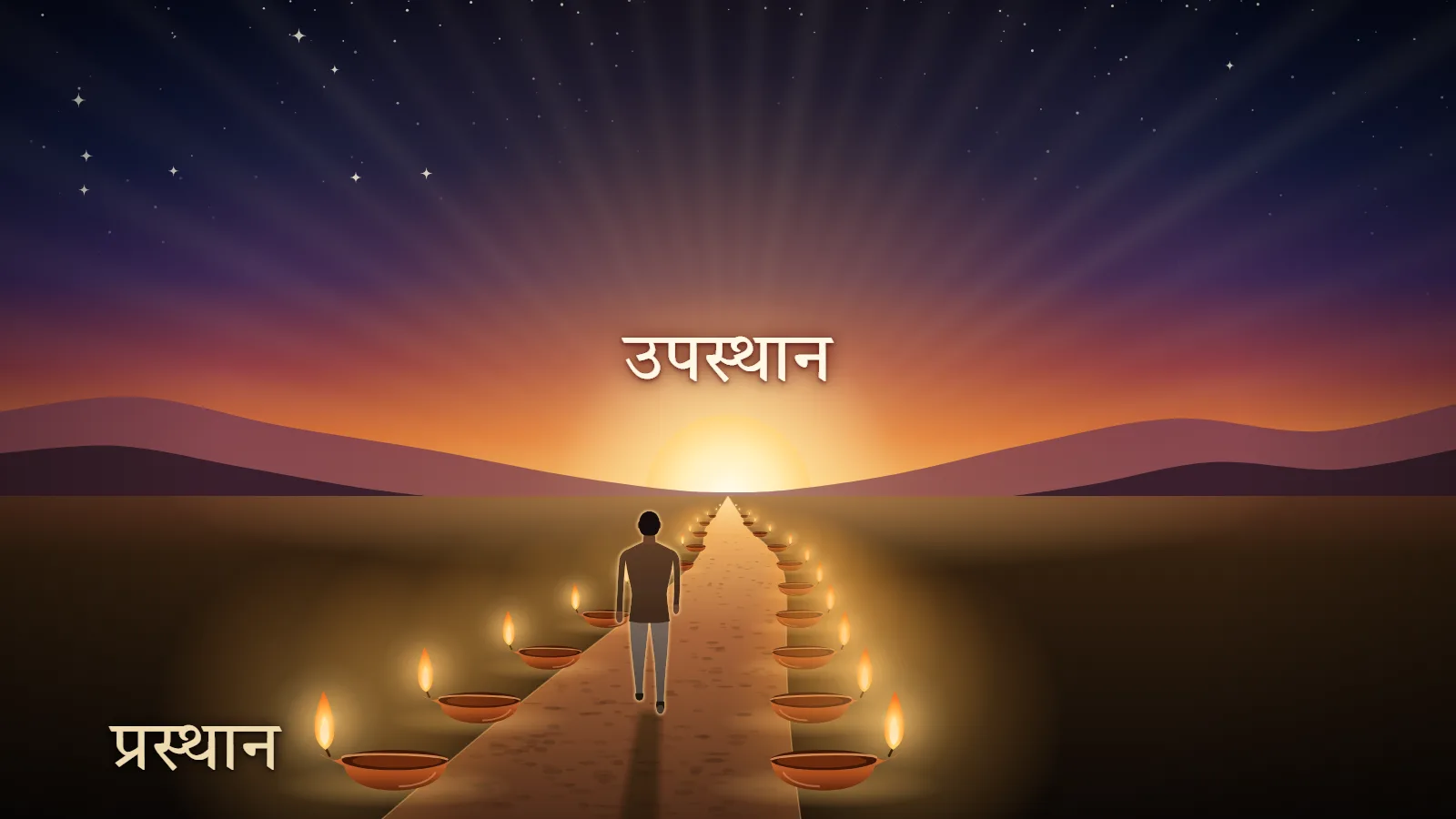
The journey from prasthan to upasthan is the resolve to move from darkness towards light, and to keep up the practice of staying close to the Supreme while living in the world. Living in the world means that, whatever field we work in, we stay devoted to God and awaken a new consciousness in the nation.
Veda Vasundhara: From Thought to Transformation — a special essay
ओ३म् उद्वयन्तमसस्परि स्वः पश्यन्त ऽउत्तरम्।— Yajurveda 35.14
Life is a journey; its direction gives it meaningHuman life is a journey, and what makes the journey worthwhile is its direction. In life, prasthan, setting out, is not simply going from one place to another. It means moving towards a purpose with our thoughts, resolves and actions. When we set out towards truth, right conduct, virtue and devotion to God, the path of life fills with light. The spiritual fulfilment of this setting out is upasthan: drawing near to the Supreme, accepting the divine order and dedicating all our actions to it.
On the occasion of Prakash Parv, the life of Guru Gobind Singh Ji is an inspiring example of this journey from prasthan to upasthan.
From darkness to lightThe Veda proclaims: उद्वयन्तमसस्परि स्वः पश्यन्त ऽउत्तरम्, that is, may we rise above darkness and behold the higher light. This light is not only outer light; it is the light of knowledge, discernment, truth and right conduct. That is: “O Lord, whose form is light! Kindly lead us out of the darkness of ignorance and lack of discernment, and grant us Your highest knowledge.” The Brihadaranyaka Upanishad gives the same inspiration: तमसो मा ज्योतिर्गमय, lead me from darkness to light.
The life of Guru Gobind Singh Ji is a setting out towards this light. His journey was from vice to virtue, from injustice to justice, from fear to fearlessness, and from adharma to the protection of dharma. The aim of his life was not only his own spiritual progress but to awaken courage, self-respect, devotion to dharma and a sense of justice in society.
The purpose of life: for the sake of dharmaIn the Bachittar Natak of the Dasam Granth we find a most significant declaration of the purpose of his life:
हम इह काज जगत मो आए। धरम हेत गुरदेव पठाए॥
That is: we have come into the world for this work, and the Gurudev sent us for the sake of dharma. The verses go on to express the resolve to spread dharma, protect the saintly and put an end to wickedness. It is a clear statement of his life's purpose and his sense of duty.
Unwavering commitment to good deedsHis composition Chandi Charitar Ukti Bilas contains a famous prayer:
देह शिवा बर मोहे इहै, शुभ करमन ते कबहूँ न टरौं।
That is: may I be given the strength never to turn back from good deeds. This prayer sums up his philosophy of life. For him, devotion to God was not only worship but the strength to stand firm in doing good.
When setting out becomes drawing nearIt is here that his prasthan becomes upasthan. When a person does every action in keeping with the will of the Supreme, with truth and with the good of all, life itself becomes a practice of being close to God. In the Yoga Darshan, Maharshi Patanjali calls this Ishvara-pranidhana. To keep one's thoughts and actions dedicated to the Supreme while living in the world is the true experience of upasthan.
Guru Gobind Singh Ji's spirituality showed itself in his courage, his sacrifice and his resolve to protect dharma. The sacrifice of the four Sahibzade is an undying chapter of this great tradition. His life teaches that true spirituality does not turn a person away from duty. It gives the strength to stand against injustice and to protect human dignity.
Upasthan: the Vedic philosophy of lifeThe word upasthan comes from the upasthan mantras of the Brahmayajna and the Sandhya prayer. It means being present near the Supreme and remaining devoted to Him. In its wider sense, it means that while living in the world, a person should always stay close to God through their thoughts and actions.
The spirit of renunciation: the true experience of upasthanThe Vedic view of life is not to renounce the world, but, while living in it, to renounce attachment and the sense of ownership. The Ishavasya Upanishad says:
तेन त्यक्तेन भुञ्जीथा मा गृधः कस्यस्विद्धनम्॥
That is: enjoy the world's resources in a spirit of renunciation, and do not covet anyone's wealth. Just as a roasted chickpea never sprouts again, the seeds of greed and attachment should not sprout in a person matured by the spirit of renunciation.
This is the aim of Vedic culture and of the Veda Vasundhara Model: to live in the world with dedication, right conduct and a spirit of service to all.
The resolve of the Veda Vasundhara ModelThe Veda Vasundhara Model is a resolve to make this same journey of ideas. Its core aim is to give the timeless values of the Indian knowledge tradition a practical form in modern life, and so to build cultured youth, empowered women and a strong nation. We believe that when there is light in our thoughts, good values enter our character; when our character holds good values, our actions become noble; and noble actions bring a new dawn to society and the nation.
The need for self-reflectionToday each of us needs to reflect on the direction in which our life is heading. Are our thoughts leading us towards virtue? Do our actions express our responsibility towards God and society?
The journey from prasthan to upasthan, from darkness to light, and from thought to transformation is what gives life its true meaning.
Come, let us draw inspiration from the life of Guru Gobind Singh Ji, become radiant ourselves, and through our thoughts, values and actions carry light into the life of the nation as well.
Would you like to write for the Veda Vasundhara Model? Send your article or idea through the contact page.